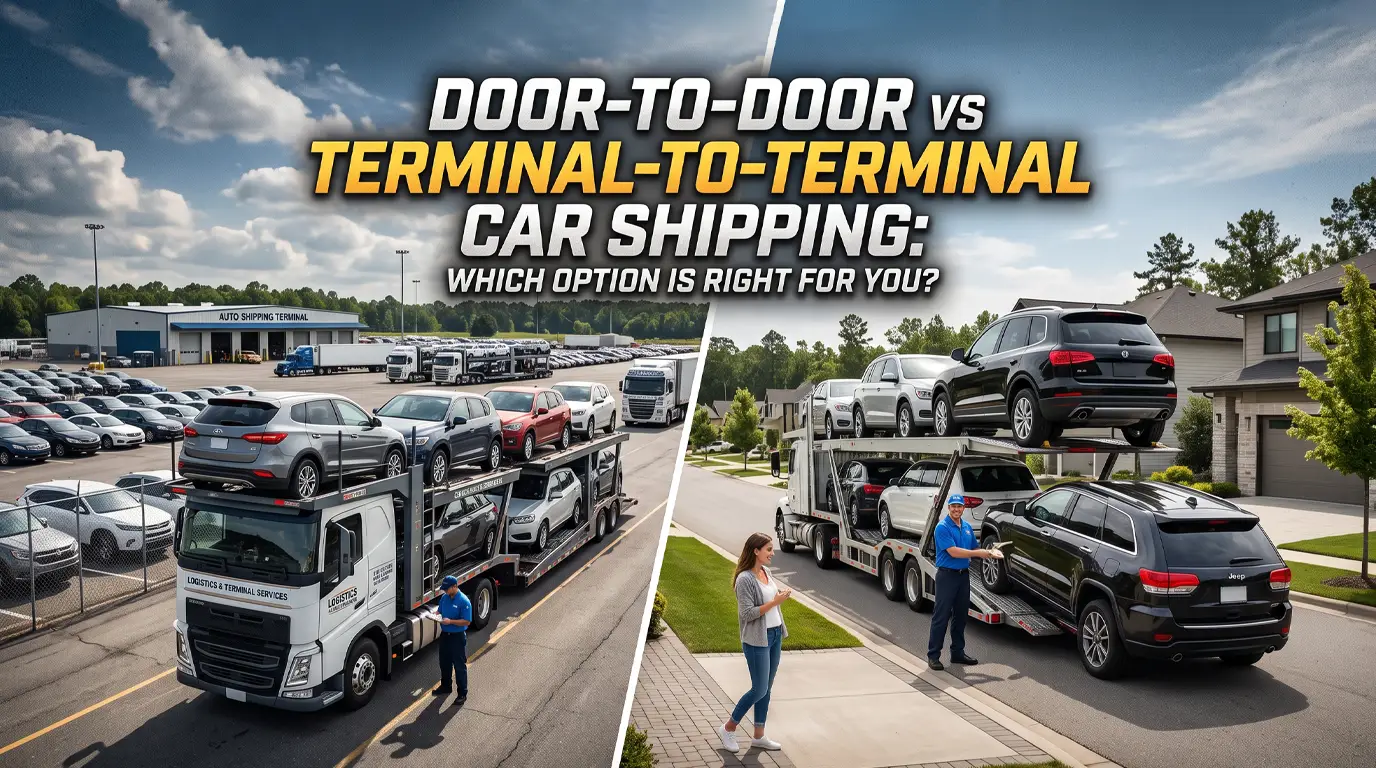
Door-to-Door vs. Terminal-to-Terminal Car Shipping: Which Option Is Right for You?
When shipping a vehicle, one of the first decisions you'll need to make is whether to choose door-to-door or terminal-to-terminal car shipping. Both methods are reliable ways to transport a vehicle, but they differ in convenience, cost, and flexibility. You need to know everything before transporting the vehicle.
Understanding the advantages and limitations of each option can help you select the service that best fits your schedule, budget, and location, whether you're relocating, purchasing a vehicle online, sending a car to a family member, or transporting a classic automobile. Knowing how Auto Shippings methods work will make the process much smoother.
What Is Door-to-Door Car Shipping?
Door-to-door car shipping is the most popular vehicle transport option available today. With this service, the carrier picks up your vehicle as close to your specified location as safely possible and delivers it near your chosen destination.
Although the term "door-to-door" suggests the truck arrives directly at your driveway, this isn't always possible. Large transport carriers may be restricted from entering narrow residential streets, gated communities, or areas with low-hanging trees or weight restrictions. In those cases, the driver will arrange a nearby meeting location, such as a shopping center, parking lot, or wide street that is safe for loading and unloading.
How It Works
- Book your vehicle shipment.
- Schedule a pickup date.
- Meet the driver at your home or a nearby accessible location.
- The vehicle is loaded onto the carrier.
- The transporter delivers the vehicle as close as possible to your destination.
- Inspect the vehicle and complete the delivery paperwork.
Benefits of Door-to-Door Car Shipping
Maximum Convenience
You don't have to travel to a storage facility or shipping terminal. The transporter comes to you, saving valuable time and effort.
Time Savings
Because you avoid driving to and from terminals, door-to-door shipping is ideal for busy professionals, families, and anyone relocating.
Reduced Vehicle Handling
Your vehicle typically remains on the same carrier from pickup to delivery, reducing the number of loading and unloading events that could increase the risk of minor damage.
Easier Scheduling
Most transport companies offer flexible pickup windows that accommodate your availability.
Ideal for Long-Distance Moves
Door-to-door service is especially helpful for cross-country relocations, military moves, college students, and online vehicle purchases.
Potential Drawbacks of Door-to-Door Shipping
While highly convenient, this service has a few limitations.
- Slightly higher transportation costs
- Accessibility challenges for large trucks
- Pickup and delivery windows may vary depending on traffic and route planning
- Rural locations may require meeting at a nearby accessible area
Despite these minor considerations, door-to-door transport remains the preferred choice for most customers.
What Is Terminal-to-Terminal Car Shipping?
Terminal-to-terminal shipping requires customers to drop off their vehicle at a designated shipping terminal before transport. After the vehicle reaches the destination terminal, the customer must pick it up.
Vehicle terminals function as storage and transfer facilities where cars are temporarily held before pickup or delivery.
Although this method was once common, fewer transport companies now offer terminal services due to the growing popularity of door-to-door shipping.
How Terminal-to-Terminal Shipping Works
- Deliver your vehicle to the assigned departure terminal.
- Complete the required inspection and paperwork.
- The vehicle is loaded for transport.
- The carrier delivers it to the destination terminal.
- Retrieve the vehicle during the terminal's operating hours.
Advantages of Terminal-to-Terminal Shipping
Lower Cost
Terminal shipping may cost less because carriers operate from centralized locations instead of making individual residential pickups and deliveries.
Flexible Drop-Off
Customers often have several days to deliver their vehicle before shipment.
Useful for Certain Locations
If you live in a remote area where carriers rarely travel, using a terminal may simplify logistics.
Convenient for Travelers
Some customers prefer to drop off their vehicle before flying to another city and collect it upon arrival.
Disadvantages of Terminal-to-Terminal Shipping
Although it may save money, terminal shipping has several drawbacks.
Less Convenient
You must arrange transportation to both the departure and arrival terminals.
Storage Fees
Many terminals charge daily storage fees if the vehicle is not picked up promptly.
Limited Availability
Fewer auto transport companies maintain terminal networks today.
More Vehicle Handling
Vehicles may be loaded and unloaded multiple times during transfers between carriers.
Restricted Business Hours
Terminal pickups must usually occur during regular operating hours, which may not align with your schedule.
Door-to-Door vs. Terminal-to-Terminal: Side-by-Side Comparison
| Feature | Door-to-Door Shipping | Terminal-to-Terminal Shippingt |
|---|---|---|
| Convenience | Excellent | Moderate |
| Pickup Location | Near your home or office | Shipping terminal |
| Delivery Location | Near your destination | Destination terminal |
| Customer Travel Required | Minimal | Required |
| Cost | Slightly higher | Often lower |
| Vehicle Handling | Less frequent | More frequent |
| Availability | Widely available | Limited |
| Storage Fees | Usually none | May apply |
| Best For | Most customers | Budget-conscious or remote-area customers |
Which Option Costs Less?
In many cases, terminal-to-terminal shipping has a lower base price because carriers don't travel to individual residential locations.
However, the actual savings may be smaller than expected after considering:
- Fuel for driving to terminals
- Time spent traveling
- Parking expenses
- Storage fees
- Rental car costs
- Lost work hours
For many customers, the convenience of door-to-door service outweighs the modest price difference.
Which Shipping Method Is Faster?
Door-to-door shipping is often faster because the vehicle stays with the same carrier for most or all of its journey.
Terminal shipping may involve additional waiting periods while:
- Vehicles accumulate for transport
- Carrier transfers occur
- Terminal schedules are coordinated
- Customers arrange pickup
As a result, terminal shipments can sometimes take longer to complete.
Which Option Is Better for Luxury or Classic Cars?
Owners of luxury, exotic, antique, and collector vehicles typically prefer door-to-door Enclosed auto transport.
Benefits include:
- Fewer loading and unloading events
- Reduced exposure to weather
- Better protection from road debris
- More personalized handling
- Lower risk of accidental scratches or dents
When transporting high-value vehicles, minimizing unnecessary handling is often worth the additional cost.
Situations Where Door-to-Door Shipping Is the Best Choice
Door-to-door transport is ideal if you:
- Are relocating across the country
- Have a busy work schedule
- Purchased a vehicle online
- Need maximum convenience
- Are you transporting a luxury or classic car
- Prefer minimal vehicle handling
- Want a simpler shipping experience
Situations Where Terminal-to-Terminal Shipping Makes Sense
Terminal shipping may be the better option if you:
- Want to reduce shipping costs
- Live near an available shipping terminal
- Have flexible pickup and delivery schedules
- Don't mind driving to the terminal
- Are shipping from or to a remote area with limited carrier access
Tips for Choosing the Right Shipping Option
Before booking your shipment, consider the following:
- Compare free quotes for both shipping methods.
- Ask whether terminal service is available in your area.
- Verify insurance coverage.
- Read customer reviews of the transport company.
- Confirm estimated pickup and delivery windows.
- Understand any storage fees or additional charges.
- Inspect your vehicle before and after transport.
A little planning can help you avoid unexpected costs and ensure a smooth experience.