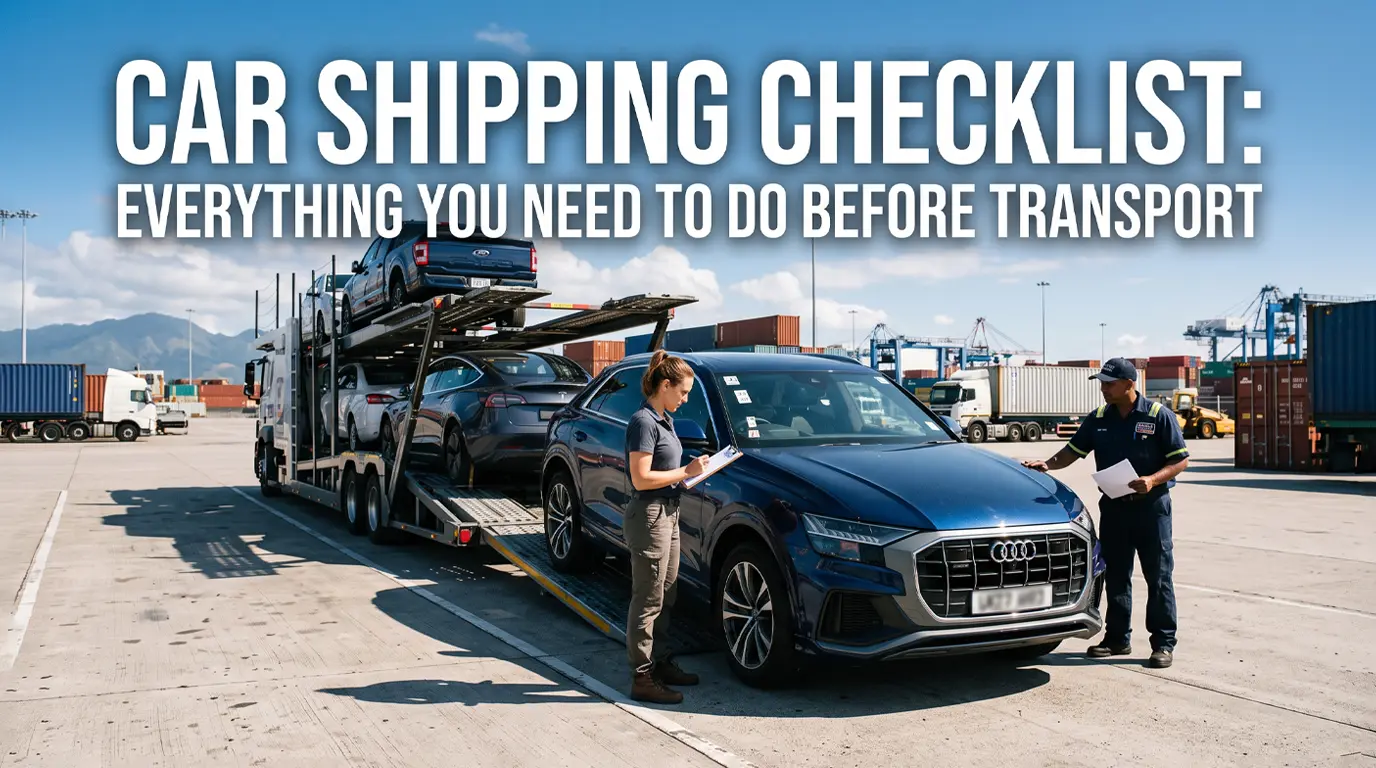
Car Shipping Checklist
Shipping your vehicle is one of the safest and most convenient ways to relocate a car, whether you're moving across the state or across the country. Proper preparation helps ensure your vehicle is transported safely, minimizes delays, and makes pickup and delivery much easier.
This Car Shipping Checklist walks you through every step of the process—from booking your shipment to inspecting your vehicle after delivery.
Before Booking Your Car Shipment
Choosing the right auto transport company is the first step toward a hassle-free experience.
Research Auto Transport Companies
Before selecting a carrier or broker, make sure they:
- Are licensed and insured
- Have positive customer reviews
- Offer transparent pricing
- Provide written shipping agreements
- Explain their insurance coverage
- Have responsive customer support
Choosing a reputable company reduces the risk of delays and unexpected issues.
Request Multiple Quotes
Compare quotes from several companies.
Don't choose a transporter based solely on the lowest price. Instead, compare:
- Customer reviews
- Insurance coverage
- Pickup timeframe
- Delivery estimates
- Available transport options
A fair price combined with reliable service often provides the best value.
Choose the Right Transport Method
Most customers choose between:
Open Auto Transport
- Most affordable option
- Widely available
- Ideal for everyday vehicles
Enclosed Auto Transport
- Maximum protection
- Recommended for luxury and classic cars
- Higher shipping cost
Select the option that best fits your vehicle and budget.
One Week Before Pickup
Wash Your Vehicle
Cleaning your vehicle makes it easier to identify any existing scratches, dents, or paint chips during the inspection.
A clean vehicle also helps ensure accurate documentation before transport.
Remove Personal Belongings
Most carriers recommend removing personal items from the vehicle.
Examples include:
- Electronics
- Clothing
- Luggage
- Sports equipment
- Important documents
- Valuables
Removing unnecessary weight also helps comply with carrier regulations.
Remove Exterior Accessories
If possible, remove or secure items such as:
- Bike racks
- Roof boxes
- Cargo carriers
- Custom antennas
- Spoilers (if detachable)
- Decorative accessories
Loose items may become damaged during transport.
Check for Fluid Leaks
Inspect your vehicle for:
- Oil leaks
- Coolant leaks
- Brake fluid leaks
- Power steering leaks
Repairing leaks before shipping helps prevent issues during transport.
Check Tire Pressure
Properly inflated tires help ensure safe loading and unloading.
Inspect tires for:
- Low pressure
- Visible damage
- Excessive wear
Check Battery Condition
Make sure your battery is fully charged and securely connected.
A dead battery can delay pickup or delivery.
24 Hours Before Pickup
Leave Only One-Quarter Tank of Fuel
A full fuel tank is unnecessary during shipping.
Keeping approximately one-quarter tank reduces vehicle weight while leaving enough fuel for loading and unloading.
Disable Your Alarm System
Vehicle alarms may accidentally activate during transport.
Disable the alarm to avoid unnecessary interruptions.
Fold Side Mirrors
If possible, fold your mirrors to reduce the chance of damage during loading.
Remove Toll Tags and Parking Passes
Electronic toll devices may be triggered while the carrier travels.
Removing them helps prevent unexpected toll charges.
Gather Required Documents
Keep these documents available:
- Driver's license
- Vehicle registration
- Proof of ownership (if required)
- Insurance information
- Shipping agreement
Pickup Day Checklist
Inspect Your Vehicle
Walk around the vehicle with the driver and carefully inspect:
- Scratches
- Dents
- Paint chips
- Cracks
- Wheel damage
- Glass condition
Take clear, time-stamped photos from multiple angles.
Review the Bill of Lading
The Bill of Lading serves as the official inspection report.
Before signing:
- Confirm vehicle information
- Verify pickup location
- Review existing damage
- Confirm delivery destination
Keep a copy for your records.
Hand Over the Keys
Provide the driver with one working key.
Most carriers require only one key during transport.
During Transport
While your vehicle is being transported:
- Stay available by phone or email.
- Monitor shipping updates.
- Notify the transport company of any schedule changes.
- Keep delivery contact information current.
Professional carriers follow scheduled routes and provide estimated delivery windows.
Delivery Day Checklist
Inspect Your Vehicle Before Signing
Before accepting delivery:
- Compare the vehicle to the pickup inspection.
- Check for any new scratches or dents.
- Inspect mirrors, wheels, bumpers, and windows.
- Start the engine.
- Verify mileage (minor differences may occur during loading).
Only sign the final paperwork after completing the inspection.
Report Any Damage Immediately
If you notice any new damage:
- Document it with photos.
- Note it on the Bill of Lading.
- Notify the carrier before signing.
- Contact the transport company promptly.
Reporting concerns immediately helps simplify the claims process if necessary.
Common Mistakes to Avoid
Avoid these common car shipping mistakes:
- Waiting until the last minute to book
- Leaving valuables inside the vehicle
- Forgetting to document the vehicle's condition
- Shipping with a full fuel tank
- Ignoring fluid leaks
- Not reading the shipping agreement
- Choosing a company based only on price
Planning ahead helps ensure a smoother experience.
Quick Car Shipping Checklist
Before Pickup:
- ✓ Book with a licensed and insured company
- ✓ Compare multiple quotes
- ✓ Wash your vehicle
- ✓ Remove personal belongings
- ✓ Remove exterior accessories
- ✓ Check tire pressure
- ✓ Fix fluid leaks
- ✓ Charge the battery
- ✓ Leave one-quarter tank of fuel
- ✓ Disable alarms
- ✓ Remove toll tags
- ✓ Take photos of your vehicle
- ✓ Review the Bill of Lading
After Delivery:
- ✓ Inspect your vehicle
- ✓ Compare photos
- ✓ Confirm condition before signing
- ✓ Report any damage immediately